Is it cheaper to get a pod or a storage unit
Is it cheaper to get a pod or a storage unit
When you are comparing portable containers and traditional self-storage, the real question is not only price, but value: access, time saved, and total logistics. If you are storing a home’s worth of furniture, furniture storage pods (pod-style services provided by third-party providers) can look pricier at first glance, yet they often replace truck rentals, repeated loading, and multiple trips. Meanwhile, a standard storage unit can be a budget win for long-term storage with infrequent moves. Which path costs less for you? By breaking down fees, usage patterns, and common scenarios, you will see where each option shines and how to keep more money in your pocket.
Before we dive into the numbers, a quick reality check helps. Average self-storage rent often ranges from about 1.10 dollars to 2.00 dollars per square foot in major metros, according to industry summaries frequently cited by SSA [Self Storage Association]. Portable container monthly rates (from third-party providers) typically run by container size, with a noticeable premium for larger units and peak months. However, a portable container service also bundles doorstep delivery and return trips that eliminate truck mileage, fuel, and a day of driving. As we compare side by side, we will factor in both direct prices and indirect costs like time, parking permits, and the risk of double-handling your items.
How third-party portable containers (pod-style services) compare to self-storage units
Third-party portable containers are delivered to your driveway, let you load at your pace, and then can be stored at a secure facility operated by that provider or moved to your next address. Traditional storage units require you to drive to a facility, unload, and later reload for your move-out. That extra handling may not just cost time; it can also increase wear on your belongings. If you plan to move soon or you value curbside convenience, the portable route can compress the entire move into fewer steps. If you are optimizing for the lowest monthly rent over many months with little need to access items, a storage unit can edge out on price.
Let’s organize what typically drives your total bill. For portable containers (third-party providers), look at delivery, pickup, monthly storage, and any long-distance transport fees. For storage units, consider the monthly rate by size, administrative fees, lock and insurance, and the cost of renting a moving vehicle. Local rules can add friction too. For example, you may need a temporary street permit or HOA [Homeowners Association] approval to place a container, while some facilities add required protection plans. With these factors in mind, the following table presents typical ranges gathered from public rate cards, facility listings, and customer quotes across several cities.
| Cost Component | Third-Party Portable Container (Pod-Style) | Traditional Storage Unit |
|---|---|---|
| Delivery to Home | 75 to 200 dollars one-time | Not applicable |
| Pickup/Redelivery | 75 to 200 dollars per trip | Not applicable |
| Monthly Storage | 140 to 320 dollars per container | 70 to 250 dollars per unit, size dependent |
| Long-Distance Transport | 900 to 3000 dollars, distance dependent | Not applicable; you arrange truck or movers |
| Truck Rental/Fuel | Not required | 60 to 200 dollars per day plus fuel and mileage |
| Admin/Setup Fees | 0 to 25 dollars | 10 to 30 dollars |
| Insurance/Protection | 10 to 35 dollars per month | 10 to 30 dollars per month |
| Climate Control Premium | Varies by provider; sometimes included at warehouse | 20 to 50 percent above standard units |
| Access Frequency | By appointment at provider warehouse; on-site if kept at home | Facility hours, sometimes 24 hours at select sites |
Notes: Prices vary by city, season, container size, and demand. Metro cores and coastal markets typically run higher. Figures reflect commonly advertised ranges seen in 2023 to 2025 data summaries and provider rate cards.
Scenario math: which one is cheaper for your situation?
Prices matter, but use-case matters more. If you are renovating and need two months of storage within the same city, a container might win because it removes two truck days and one extra unload and reload. If you are archiving inventory for a year and rarely touch it, a traditional unit usually wins thanks to lower monthly rent and simpler access. The following comparison estimates totals in three common scenarios. These are illustrative, built from typical urban ranges, and meant to help you frame your own quote comparisons.
Watch This Helpful Video
To help you better understand furniture storage pods, we've included this informative video from TailHappyTV. It provides valuable insights and visual demonstrations that complement the written content.
| Scenario | Third-Party Portable Container (Pod-Style) | Traditional Storage Unit |
|---|---|---|
| Local remodel, 2 months, 2-bedroom contents |
Delivery 150 dollars + 2 months at 220 dollars = 440 dollars + return 150 dollars Estimated total: about 740 dollars |
10x15 unit 160 dollars per month x 2 = 320 dollars + admin 20 dollars + lock 15 dollars + truck 120 dollars + fuel 40 dollars Estimated total: about 515 dollars |
| Apartment turnover, 1 month, frequent access |
Delivery 120 dollars + 1 month 200 dollars + return 120 dollars Estimated total: about 440 dollars |
10x10 unit 130 dollars + admin 15 dollars + lock 15 dollars + two van days 180 dollars + fuel 40 dollars Estimated total: about 380 dollars |
| Cross-city move, 1 month storage cushion |
Delivery 150 dollars + 1 month 220 dollars + transport 1200 dollars + redelivery 150 dollars Estimated total: about 1720 dollars |
10x15 unit 160 dollars + truck 1-way 320 dollars + fuel/mileage 100 dollars + load/unload time cost Estimated total: about 580 to 700 dollars, plus labor |
You may notice that portable containers rarely beat a storage unit on pure monthly rent. Instead, they can be cheaper when the value of doorstep loading, fewer handling steps, and reduced truck time offsets higher base rates. This is especially true if you would otherwise pay for movers twice. Meanwhile, storage units tend to be cheaper for long durations or when you can DIY the driving comfortably. Asking yourself how many times you will load and unload is a surprisingly reliable predictor of total cost.
If you need doorstep convenience, limited handling, and plan to move soon, choose a third-party portable container (pod-style service). If you prioritize lowest monthly price and frequent access at a facility, choose a traditional unit. If you face strict street or driveway limits, verify placement rules first.
Hidden fees and logistics that can tip the balance
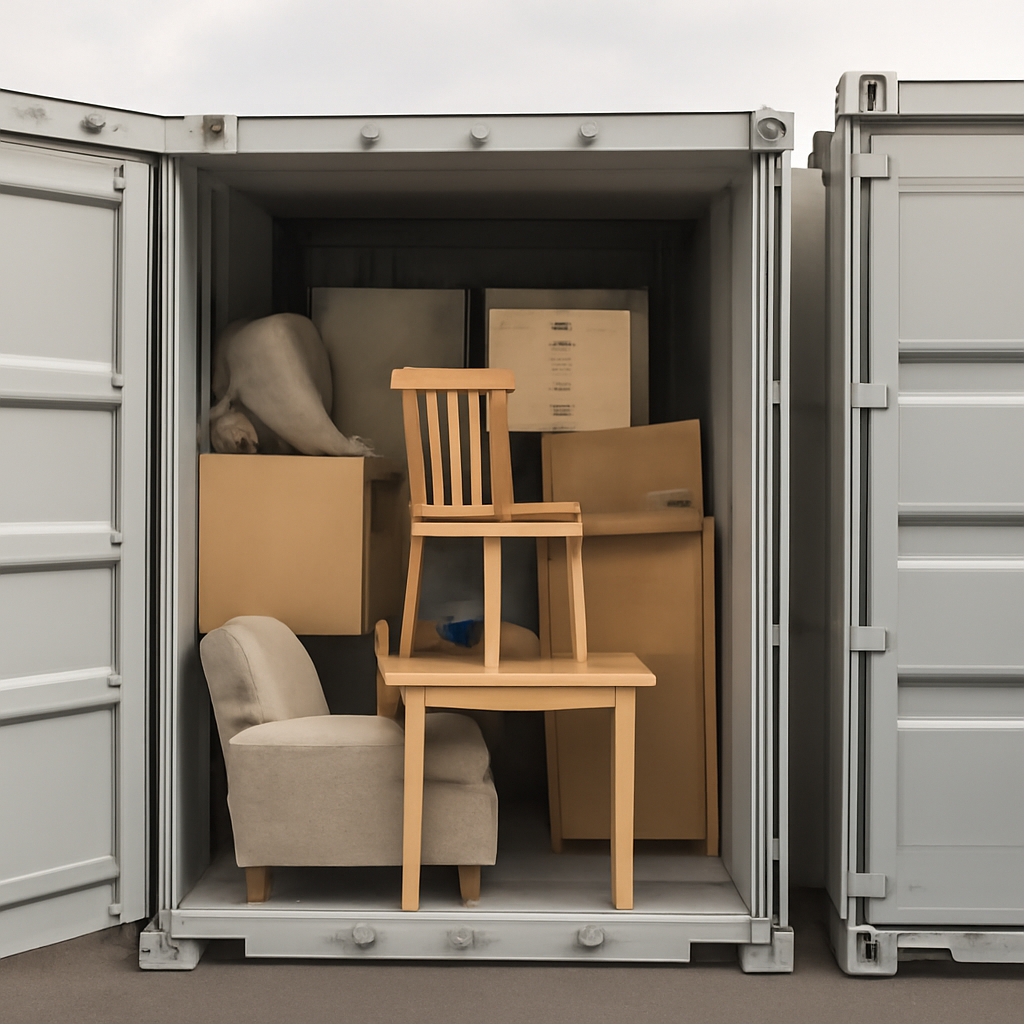
Small line items can swing your decision by hundreds of dollars. With portable containers (third-party providers), watch for placement restrictions, street permits, or HOA [Homeowners Association] approvals. Some homes have steep driveways or narrow streets where container placement is not possible, leading to alternate delivery fees. If you need repeated access while the container is at the provider's warehouse, appointment or handling fees may apply. On the positive side, many providers pro-rate partial months or offer bundled pricing if you also book transport to your next address.
With storage units, the headline rate is only part of your bill. Facility promotions may spike after three months, and climate control can add 20 to 50 percent. Many renters underestimate transportation costs: weekend truck surcharges, mileage limits, and fuel. Then there is time. Two round-trips to load and unload can consume a full day, and that time has value whether you are paying movers or stepping away from your own work. According to industry snapshots aggregated by SSA [Self Storage Association], about one in ten households rent storage at some point, and customers regularly cite convenience and access as their top decision drivers. Price matters, but friction matters too.
- Ask about rate increases after introductory periods.
- Confirm if you need city permits for placing a container at the curb.
- Check access hours and any gate code change fees at storage facilities.
- Verify what is covered by contents protection and if your homeowner policy extends to stored items.
- Measure large furniture and confirm door clearance and container or unit dimensions.
When a storage unit wins, when a portable container wins
Choose a traditional storage unit when your timeline stretches beyond three to six months and you rarely need to move locations. The per-month savings often compound, especially if you do not need climate control. It also suits business inventory that you must access during facility hours. If you already own a cargo van or have low-cost transportation, the monthly price advantage grows further. Just plan for packing supplies, a quality lock, and safe stacking to maximize your cubic space.
Choose a portable container (third-party pod-style service) when you want to avoid loading and unloading multiple times, or when you are moving soon and value doorstep convenience. The container becomes your rolling storage; you pack once, store as long as needed, and receive the same container at your new address. For families with small children, seniors, or teams trying to minimize downtime, consolidating steps saves stress. It is also a strong fit for renovations when you want your belongings close by on your property for quick access, provided local placement rules allow it.
- Best for long-term, low-touch storage: traditional unit.
- Best for move-in and move-out simplicity: third-party portable container.
- Best for frequent on-site access during a remodel: third-party portable container on driveway.
- Best for budget over eight-plus months: traditional unit, especially non-climate-controlled.
How AMB Moving & Storage Inc [Incorporated] makes the choice easier
![Illustration for How AMB Moving & Storage Inc [Incorporated] makes the choice easier related to furniture storage pods](https://admanager-ai.s3.us-east-1.amazonaws.com/seopro-blog-inline-images/56923512-213b-45b9-b18c-400beb666a95.png)
Moving can be stressful and complicated, requiring careful planning, coordination, and time to find reliable providers. AMB Moving & Storage Inc [Incorporated] built AMB Moving Concierge to simplify every step. In one place, you can compare third-party portable container options against traditional storage units, understand true end-to-end costs, and see schedules that match your dates. Instant quotes mean you skip phone tag and guesswork, while service booking and easy move management keep everything coordinated from delivery to final drop-off.
Because AMB Moving & Storage Inc [Incorporated] coordinates storage, transport, and support services, you are less likely to miss a hidden fee or overlook a permit. Need a container from a third-party provider on Friday and movers on Saturday? Prefer a climate-controlled unit near your office? You can mix and match services without juggling separate vendors. Individuals and businesses appreciate that the platform tracks milestones, notifications, and paperwork, reducing surprises. When you know the full picture upfront, deciding between a third-party portable container and a storage unit becomes a practical calculation, not a gamble.
Expert tips to lower your storage and moving costs
Space planning is your quiet superpower. Before you choose a size, create a quick inventory and group items by stackability and fragility. Modular furniture, mattress bags, and uniform boxes cut wasted air space and can reduce you by one container size or one unit size. Disassemble table legs and remove sofa feet to fit through narrow openings and to stack tighter. Label all sides of boxes, not just the top, to speed unloading and cut labor time.
Next, target fee reductions. Ask providers about day-of-week pricing; weekdays can be cheaper for deliveries and trucks. If you will not access items often, choose a facility farther from downtown to save monthly rent. If you use a third-party portable container service, schedule delivery when you have help on hand to load the same day and minimize driveway placement time. Finally, compare insurance options. Some contents protection from storage providers overlaps with homeowner policies, so you may avoid paying twice by verifying coverage with your agent.
- Right-size your space with an inventory and a quick volume estimate.
- Bundle services through one coordinator to reduce per-visit fees.
- Flatten costs by moving midweek and midmonth when demand is lower.
- Use furniture blankets and corner protectors to prevent damage and extra claims.
- Set a reminder to reassess rates after promotional periods end.
Bottom line: what is truly cheaper for you?
If you are optimizing for the lowest monthly rate over many months with minimal handling, a traditional storage unit usually wins. If you are optimizing for fewer steps, doorstep convenience, and a near-term move, third-party portable containers often win on total cost of effort. The ideal choice depends on your access needs, timeline, and how much you value loading once versus twice. With Instant quotes and easy comparisons from AMB Moving & Storage Inc [Incorporated], you can see both options side by side and choose the path that saves you money and time.
Here is a quick self-check you can use right now:
| Question | If Yes | Likely Better Choice |
|---|---|---|
| Will you move locations within 90 days? | Loading once is valuable | Portable container (third-party) |
| Do you need frequent access to items? | Facility access hours matter | Storage unit |
| Is monthly budget the top priority? | Lowest ongoing cost | Storage unit |
| Do you want curbside delivery and pickup? | Reduce driving and rentals | Portable container (third-party) |
| Are street permits or HOA [Homeowners Association] rules restrictive? | Might prevent container placement | Storage unit |
Still unsure? Many people are. That is why AMB Moving & Storage Inc [Incorporated] offers a simple way to compare quotes for both solutions in minutes, layer on optional services like packing help or climate-controlled storage, and manage your plan from one dashboard. Whether you choose a third-party container service or a facility unit, the goal is the same: safeguard your belongings, reduce steps, and avoid surprise fees. If you want the most streamlined path, Instant quotes, service booking, and easy move management bring clarity to the entire process and help you secure the best deal on storage solutions and third-party pod-style services.
The cheapest option is the one that fits your timeline, access needs, and how many times you want to load and unload.
Imagine getting side-by-side prices and a clear schedule in minutes, then booking the exact mix of services you need without a single phone tag. In the next 12 months, more movers will expect this simplicity as standard.
Which matters most for your situation today: the lowest monthly rate, or the time and effort saved by loading once with a third-party pod-style service?
Additional Resources
Explore these authoritative resources to dive deeper into furniture storage pods.
Streamline Your Move and Storage with AMB Moving & Storage Inc [Incorporated]
Get instant quotes and seamless coordination for moving and storage through AMB Moving Concierge, and compare third-party portable container options as needed to find the best fit for your timeline and budget.
Get Instant Quote


Comments
Post a Comment